On this page 6 sections
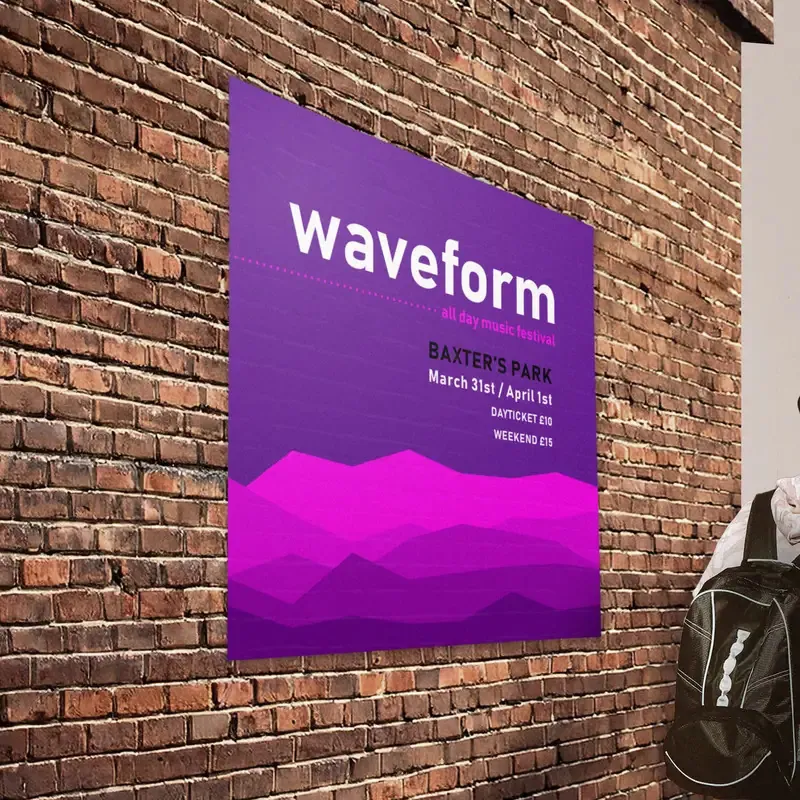
Event posters should go up three to six weeks before the date, depending on the event’s size. Each poster needs the name, date, time, venue and how to get tickets. Use A3 and A4 for local shops and noticeboards, larger sizes for venues, and Correx boards outdoors. Order in two rounds: boards first, then paper posters.
Whether it is a quiz night, a charity ball, a craft fair, a gig or a sports day, the success of most events depends on getting people through the door. Social media helps, but posters reach the people who live and work near the venue, and they stay in view for weeks. The key is timing: posters that go up too late are wasted, and posters that go up too early are forgotten. This timeline helps you plan the print around the date.
When to start promoting
Lead time depends on how much planning your audience needs:
| Event type | Posters up |
|---|---|
| Quiz nights, open mic, small fundraisers | 2 to 3 weeks before |
| Fairs, fêtes, school events, local gigs | 3 to 4 weeks before |
| Ticketed concerts, plays, festivals | 6 weeks or more before |
| Conferences, balls, big community events | 8 weeks or more, with a second wave nearer the date |
Work back from the “posters up” date to find your print deadline. Allow time to write and check the design, then the Saver production time shown on each product page, then delivery, then a day or two to distribute posters around town.
What every event poster needs
Before thinking about design, check the poster answers the questions people actually have:
- What is it? The event name, plus a few words if the name alone is unclear.
- When? Day, date and time, written in full.
- Where? The venue name and a short direction or postcode.
- How much and how to book? Ticket details, a short web address or phone number.
- Why come? One or two headline attractions.
Then design around them. The event name and date should be readable from a few metres away; everything else can be smaller. Our earlier post on poster design tips covers layout, fonts and colour in more detail, and our article on promotional poster ideas has wording that works.
Sizes and quantities by venue
Different places suit different sizes:
- Shop windows, pubs and cafés: A3, sometimes A2 for a willing shop with space.
- Noticeboards in libraries, schools and community centres: A4, as space is tight.
- The venue itself: A1 or A0 at the entrance, so people know they are in the right place.
Our A3 poster printing page is a common choice for town-wide coverage, with quantities from one to 99. The main poster printing page lists every size from A5 to A0 for a mixed order. For big campaigns, such as a festival handing posters to dozens of businesses, the indoor posters range starts at 25 copies and goes much higher, with the cost per poster falling as quantity rises.
To estimate quantity, list the places that will genuinely display a poster, then add ten to twenty spares for replacements and late opportunities.
Indoor and outdoor materials
Indoors and behind glass, 150gsm satin paper is right for almost every event poster. Outdoors, paper will not last. For roadside and railing signs, use Correx poster boards, which are rigid, waterproof and can be drilled for cable ties. For flat outdoor surfaces, waterproof PVC posters are another option.
Correx boards have a longer Saver production time, 10 working days, than paper posters at 6 working days. That is why it makes sense to order in two rounds: outdoor boards first, then paper posters a little later once every detail is confirmed.
Week-by-week checklist
- Eight weeks out: confirm date, venue and ticketing. Write the poster wording.
- Six weeks out: finish the design. Order Correx boards for outdoor sites.
- Five weeks out: final check of every detail with a second person. Order paper posters.
- Four weeks out: posters delivered. Start distributing to shops and venues.
- Three weeks out: most posters up. Ask permission for outdoor sites.
- One week out: roadside boards up. Replace any posters that have been taken down.
- After the event: take every poster and board down within a few days, and thank the businesses that displayed them.
Shorter events can compress this, but keep the order: outdoor boards first, details checked twice, posters up before people make plans. Find every poster size and material in our posters category.
Keeping a record
Keep a simple list of where every poster went. It makes taking them down easy, shows which places were willing to help, and becomes next year’s distribution list. A note of which locations brought in ticket sales, if you ask buyers where they heard about the event, tells you where to focus next time.
Questions
How far in advance should event posters go up?
Two to three weeks for small local events, three to four for fairs and gigs, and six weeks or more for ticketed shows and large events.
What information should an event poster include?
The event name, day, date, time, venue, ticket or booking details and one or two headline attractions.
What size are most event posters?
A3 for shops and pubs, A4 for noticeboards and A1 or A0 at the venue entrance.
How many posters do I need for an event?
Count the places that will genuinely display one, then add ten to twenty spares.
Can I use paper posters outdoors for an event?
Not for long. Use Correx boards or waterproof PVC posters outside.